If you’ve ever stepped out on a humid Gurugram morning with sleek hair and come home with a halo of frizz, you already know how frustrating unmanageable hair can be. Frizzy hair isn’t just a bad-hair-day problem – it’s often a sign that your hair’s cuticle, moisture balance, or texture needs targeted care. With so many professional treatments available today – hair Botox, keratin, smoothening, hair spa, and customised anti-frizz protocols – it’s easy to get overwhelmed. The truth is, there’s no single treatment that works best for every hair type. The right choice depends on your hair’s texture, dryness, damage history, and the finish you’re hoping for.
In this guide, we break down the most effective salon hair treatments for frizzy hair in 2026, how each one works, who it suits, and how to maintain your results – so you can make an informed decision instead of guessing.
Why Does Hair Become Frizzy?
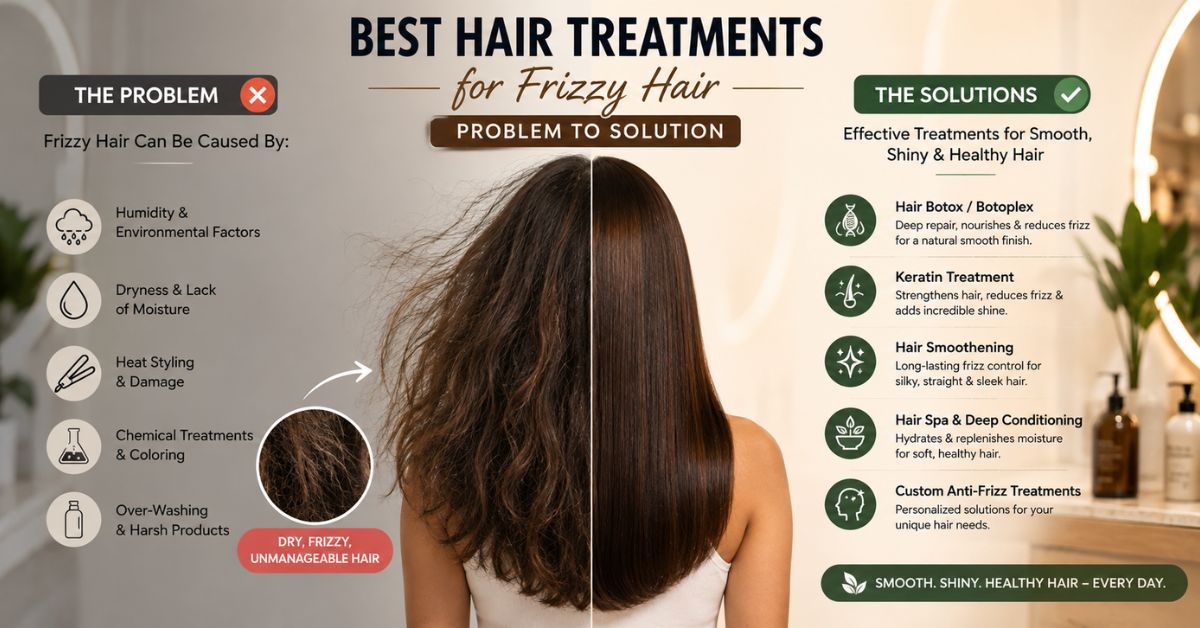
Frizz happens when the outer layer of the hair (the cuticle) lifts or roughens, letting moisture in unevenly and causing strands to swell and lose their smooth shape. Several everyday factors contribute to this:
- Humidity – moisture in the air causes hair strands to absorb water unevenly, disrupting the cuticle.
- Dryness and lack of moisture – under-hydrated hair is more prone to roughness and flyaways.
- Damaged hair cuticles – from over-processing, harsh brushing, or environmental stress.
- Heat styling – repeated use of straighteners, curling irons, and blow dryers without protection.
- Chemical treatments – colouring, bleaching, or perming can weaken the hair’s structure over time.
- Over-washing – stripping natural oils too frequently can leave hair dry and rough.
- Environmental exposure – sun, pollution, and hard water all take a toll on hair texture.
- Improper hair-care routine – using products not suited to your hair type or skipping conditioning.
Understanding the root cause of your frizz is the first step toward choosing a treatment that actually addresses it, rather than just masking it temporarily.
Best Hair Treatments for Frizzy Hair in 2026
Professional hair treatments for frizzy hair generally fall into a few categories – each with a different approach, finish, and level of commitment. Here’s a closer look at each one.
Hair Botox / Botoplex Treatment
A hair Botox (sometimes offered as a Botoplex-type treatment) is a conditioning-based treatment designed to fill in gaps in the hair shaft caused by damage, replenishing lost proteins and moisture. Unlike treatments that chemically alter hair structure, this approach focuses more on nourishment and frizz reduction.
This type of treatment can help improve the appearance, manageability, softness, and smoothness of dry or frizzy hair, often giving a more natural-looking fall compared to a poker-straight finish.
- Ideal hair type: Dry, damaged, colour-treated, or chemically processed hair
- Main benefits: Reduced frizz, added softness, improved shine and manageability
- Expected result: Smoother, healthier-looking hair with a natural fall
- Approximate longevity: Varies by hair type and aftercare – a stylist can give a realistic estimate
- Maintenance: Sulphate-free hair care and reduced heat styling help extend results
Treatment suitability should always be assessed based on your individual hair condition during a consultation.
Keratin Treatment
Keratin treatments work by depositing keratin protein onto the hair shaft and sealing it in with heat, temporarily smoothing the cuticle. This is one of the most widely recognised salon treatments for frizz control.
- Ideal hair type: Coarse, curly, or frizz-prone hair seeking a sleeker finish
- Main benefits: Noticeably reduced frizz, glossier appearance, easier daily styling
- Expected result: Smoother, straighter-looking strands with reduced volume
- Approximate longevity: Depends on hair growth, texture, and how it’s maintained
- Maintenance: Gentle, sulphate-free washing and minimal heat exposure recommended
Hair Smoothening
Hair smoothening focuses primarily on straightening and taming texture, offering one of the most sleek and long-lasting finishes among frizz treatments. It differs from Botox and hair spa in that it’s more intensive and structurally alters the hair’s texture rather than focusing mainly on conditioning.
- Ideal hair type: Very frizzy, coarse, or wavy hair wanting a straighter, sleeker look
- Main benefits: Strong, lasting frizz control and a smooth, manageable texture
- Expected result: Straighter, sleeker hair with significantly reduced frizz
- Approximate longevity: Tends to last longer than milder treatments, though this varies by individual
- Maintenance: Root touch-ups over time as new hair grows in, plus suitable aftercare products
Hair Spa & Deep Conditioning
A hair spa combines cleansing, deep conditioning, scalp massage, and steam therapy to restore hydration and softness. It’s a gentler option compared to chemical-based treatments and works well as both a standalone service and a maintenance step between other treatments.
- Ideal hair type: Mildly frizzy, dry, dull, or stressed hair
- Main benefits: Improved hydration, softness, shine, and scalp health
- Expected result: Softer, more nourished hair with a natural texture
- Approximate longevity: Shorter-lasting than chemical treatments – typically needs regular repeat sessions
- Maintenance: Low commitment; works well as a recurring monthly ritual
Professional Anti-Frizz Treatments
Beyond the standard categories, many premium salons offer customised anti-frizz protocols that combine elements of conditioning, bonding, and smoothing based on your specific hair texture and condition. These are typically designed after a detailed hair analysis, making them a good option if your hair doesn’t fit neatly into one treatment category.
Hair Botox vs Keratin vs Smoothening vs Hair Spa
Here’s a quick side-by-side comparison to help you understand how these treatments differ:
| Treatment | Best For | Frizz Control | Finish | Maintenance |
| Hair Botox / Botoplex | Dry, damaged, chemically treated hair needing repair + smoothness | High | Soft, natural, voluminous | Moderate – sulphate-free routine |
| Keratin Treatment | Frizzy, unruly hair wanting a sleeker, straighter finish | High | Sleek, glossy, straighter | Moderate to high – gentle wash routine |
| Hair Smoothening | Very frizzy, coarse, or wavy hair wanting long-lasting straightness | High | Very sleek and straight | Higher – root touch-ups over time |
| Hair Spa / Deep Conditioning | Mildly frizzy, dry, or dull hair needing hydration | Mild to moderate | Soft, nourished, natural texture | Low – repeat sessions for upkeep |
Results vary by individual hair type, condition, and aftercare – the above is a general guide, not a guarantee.
Which Hair Treatment Is Best for Your Hair Type?
Frizz shows up differently depending on your hair’s natural texture and history. Here’s a general starting point for different situations:
- Dry & frizzy hair: Often benefits from hydration-focused treatments like hair spa, sometimes paired with a conditioning treatment such as hair Botox.
- Curly/frizzy hair: May respond well to smoothening or keratin, depending on how much curl reduction is desired.
- Wavy & unruly hair: Keratin or a customised anti-frizz treatment can help create a more manageable, uniform texture.
- Chemically damaged hair: Conditioning-based treatments like hair Botox are often considered gentler starting points.
- Fine hair: May need a lighter-touch treatment to avoid excess weight or flatness.
- Thick & coarse hair: Often suited to smoothening or keratin for more noticeable frizz reduction.
- Mildly frizzy hair: A hair spa or light conditioning treatment may be sufficient without a stronger chemical process.
Because so many factors are at play, a professional consultation is genuinely useful before committing to a treatment – what works for one person’s curl pattern or damage level may not suit another’s.
How to Maintain Frizz-Free Hair After a Salon Treatment
Whichever treatment you choose aftercare plays a big role in how long your results last. A few practical habits go a long way:
- Use a sulphate-free shampoo and conditioner suited to treated hair
- Reduce excessive heat styling where possible
- Apply a heat protectant before using styling tools
- Keep up with regular deep conditioning
- Avoid over-washing your hair
- Protect hair from humidity with anti-frizz serums or protective styling
- Follow your salon’s specific aftercare instructions closely
- Schedule maintenance treatments or touch-ups as recommended by your stylist
Home Remedies vs Professional Hair Treatments for Frizzy Hair
Home remedies – like oiling, DIY hair masks, or natural conditioning ingredients – can genuinely help with hydration and day-to-day maintenance, especially for mild dryness. They’re a useful part of an ongoing hair-care routine.
That said, professional salon treatments are formulated and applied under controlled conditions to target frizz, damage, or texture more precisely. For persistent frizz, chemically treated hair, or hair with structural damage, a salon treatment can offer more targeted, professionally guided care than home remedies alone. The two aren’t mutually exclusive – many people use home care to maintain results between professional treatments.
How to Choose the Right Salon Treatment for Frizzy Hair
Before booking a treatment, it helps to think through:
- Your hair texture (fine, medium, coarse, curly, wavy, straight)
- Hair porosity and current condition
- Existing damage from heat, chemicals, or environmental exposure
- Any previous colour or chemical treatments
- The finish you want (natural and soft vs. sleek and straight)
- How much maintenance you’re willing to commit to
- Getting a professional consultation before finalising your treatment
A stylist who examines your hair in person – rather than a generic online recommendation – will always give you the most accurate guidance.
Why Choose Eikon Luxury Salon for Frizzy Hair Treatments?
At Eikon Luxury Salon in Gurugram, frizzy and unmanageable hair is treated with a consultation-first approach. Rather than offering a one-size-fits-all service, our stylists assess your hair’s texture, damage level, and history before recommending a treatment path – whether that’s a Botoplex-style hair Botox, hair smoothening, a nourishing hair spa, or a customised combination.
As a premium salon, Eikon also offers complementary services such as hair colouring and ongoing hair-care guidance, so your frizz treatment fits into a broader, healthier hair-care routine rather than a one-off fix.
We don’t promise permanent or guaranteed results – hair care is individual, and honest expectations lead to better outcomes. What we do offer is an experienced team, quality products, and a treatment plan built around your hair, not a generic package.
Ready to deal with frizz the right way? Book a professional hair consultation at Eikon Luxury Salon in Gurugram and let our stylists recommend a treatment suited to your hair type and condition.
Frequently Asked Questions
What is the best hair treatment for frizzy hair?
There isn’t a single “best” treatment for everyone – the right choice depends on your hair texture, dryness, damage level, and desired finish. Hair Botox, keratin, and smoothening all target frizz differently, while hair spa is better suited to mild dryness. A professional consultation at a salon like Eikon Luxury Salon can help identify what your hair actually needs.
Is hair Botox good for frizzy hair?
Hair Botox (often offered as a Botoplex-type treatment) is generally chosen by people with dry, damaged, or chemically treated hair who want reduced frizz along with added softness and shine. It tends to give a more natural fall than a poker-straight finish, but suitability should always be assessed by a stylist based on your hair’s current condition.
Is keratin better than hair Botox for frizzy hair?
Keratin and hair Botox both address frizz, but they work differently. Keratin treatments generally focus on smoothing the hair shaft for a sleeker, straighter look, while Botox-type treatments focus more on conditioning and reducing frizz with a softer finish. Which is “better” depends on your hair type, damage level, and the finish you want.
Which salon treatment is best for dry and frizzy hair?
For dry and frizzy hair, treatments that combine deep conditioning with frizz control – such as hair Botox or a nourishing hair spa followed by a smoothing treatment – are often considered. A stylist can recommend a combination based on how dry and porous your hair currently is.
How long does a frizz-control hair treatment last?
Longevity varies by treatment type, hair texture, hair growth, and how well the hair is maintained afterward. Some treatments may hold up for a few months, while others can last longer with proper aftercare. Your stylist can give you a more accurate estimate after assessing your hair.
Can hair spa reduce frizz?
A hair spa can help with mild frizz caused mainly by dryness, since it focuses on deep conditioning and hydration. However, it typically doesn’t offer the same level of frizz control as chemical-based treatments like keratin, smoothening, or hair Botox for stubborn or coarse frizz.
Is smoothening good for frizzy hair?
Hair smoothening is often chosen by people with very frizzy, coarse, or wavy hair who want a long-lasting straight and sleek finish. It’s a more intensive treatment than a hair spa, so it’s usually recommended after a proper consultation to check if your hair can handle the process.
How can I maintain frizz-free hair after a salon treatment?
Use sulphate-free shampoo and conditioner suited to treated hair, limit heat styling, apply a heat protectant when you do style, avoid over-washing, protect hair from humidity when possible, and follow your salon’s specific aftercare instructions. Scheduling maintenance sessions as recommended by your stylist also helps extend results.